When anxiety hits, your breath is the fastest tool you have — and it’s always with you. A racing mind is hard to control directly, but your breathing is something you can change on purpose in seconds, and your nervous system follows. Slow, deliberate breathing signals your body that it’s safe to calm down. The best part: you can do it anywhere, no app or equipment required.
Also Read


Here are simple, proven breathing exercises to calm anxiety fast, how each one works, and when to use them — explained clearly so you can start on your very next breath.
Why Breathing Calms Anxiety
Anxiety triggers your body’s “fight or flight” response: fast, shallow breathing, a racing heart, tense muscles. Slow breathing — especially a longer exhale than inhale — gently activates the opposite, “rest and digest” response, helping your heart rate settle and your body unclench. You’re not imagining the relief; you’re using your breath to shift your physiology. That’s why this works when “just calm down” never does.
Quick Answer: The Simplest Technique to Start
If you only learn one, make it this: breathe in for 4 counts, out for 6. The longer exhale is what calms you. Do that for a minute or two and most people feel the edge come off. Everything below is a variation on the same principle.
5 Breathing Exercises to Try
1. Extended Exhale (4-6 breathing)
Breathe in gently through your nose for a count of 4, then out slowly through your mouth for a count of 6. Repeat for 1–3 minutes. The drawn-out exhale is the active ingredient. This is the easiest entry point and works almost anywhere.
2. Box Breathing
Used by people in high-pressure jobs for good reason. Breathe in for 4, hold for 4, out for 4, hold for 4 — tracing the four equal “sides” of a box. The steady rhythm and gentle holds bring focus and calm. Great when your mind is racing and you need structure.
3. Belly (Diaphragmatic) Breathing
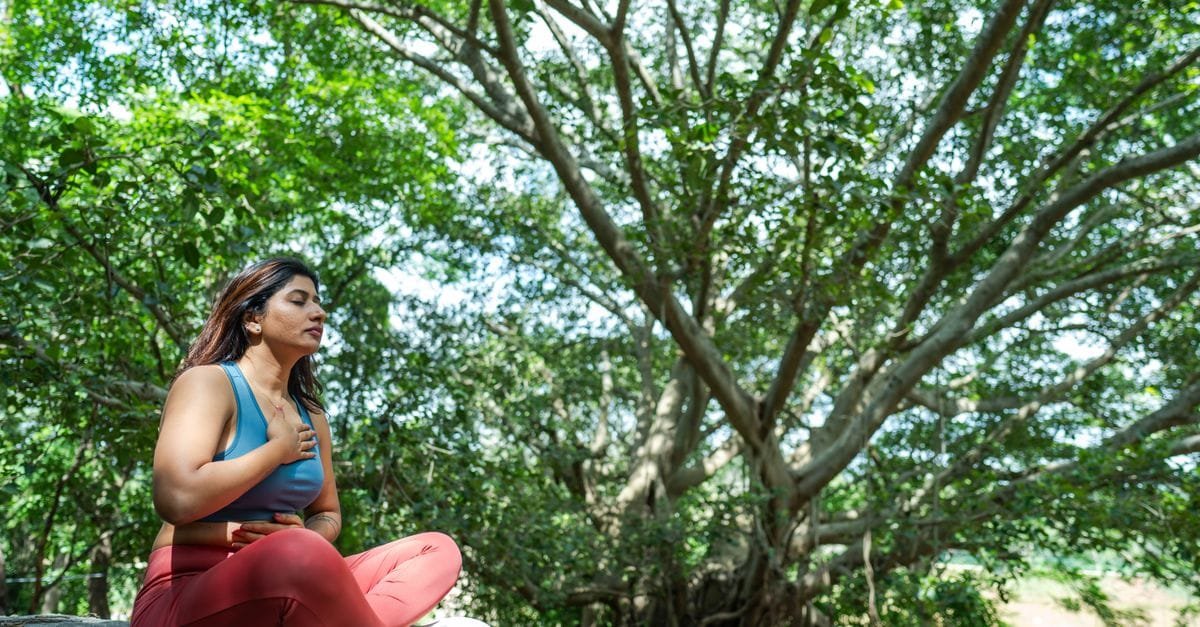
Put one hand on your chest, one on your belly. Breathe so the lower hand rises and the upper stays still — deep, into the belly, not shallow into the chest. Anxious breathing is usually high and shallow; this retrains it to be slow and deep. Practice it lying down first, then use it anytime.
4. 4-7-8 Breathing
Breathe in through your nose for 4, hold for 7, exhale slowly through your mouth for 8. The long hold and exhale make it especially good for winding down before sleep. If holding for 7 feels like too much at first, shorten the counts but keep the exhale the longest.
5. Pursed-Lip Breathing
Breathe in through your nose, then exhale slowly through pursed lips as if gently blowing out a candle. It naturally slows your breath and is easy to remember in a stressful moment. A good one for when you feel short of breath from anxiety.
How to Get the Most From Them
A few tips make these far more effective. Breathe gently — you’re slowing down, not gulping air; over-breathing can make you lightheaded. Make the exhale longer than the inhale whenever you can. Practice when you’re calm, not only in a crisis, so the technique is familiar when you need it. And combine it with a grounding cue — relax your shoulders, unclench your jaw — to deepen the effect. A minute or two is genuinely enough to feel a shift.
When to Use Each One
Reach for extended exhale or pursed-lip breathing for fast, discreet relief in the moment (a meeting, a queue, a wave of worry). Use box breathing when you need focus and steadiness. Use belly breathing as daily practice to retrain your default pattern. Use 4-7-8 at night to help your body wind down. Keep one or two favorites in your back pocket so you’re never without a tool.
An Important Note
These exercises are a wonderful tool for everyday anxiety and stress. They are not a substitute for professional care. If anxiety is frequent, severe, or interfering with your daily life — or if you ever feel panic with chest pain or trouble breathing that worries you — please talk to a doctor or mental-health professional. Breathing techniques work best alongside the right support, not instead of it.
As an Amazon Associate, The Self-Care Edit earns from qualifying purchases.
How Breathing Calms the Body
It seems almost too simple, but breathing is one of the fastest ways to calm your nervous system — and there’s a reason. When you’re anxious, your body shifts into “fight or flight,” with fast, shallow breathing. Slow, deep breathing does the opposite: it signals to your body that you’re safe, activating the “rest and digest” response that lowers your heart rate and eases tension. Because breath is one of the few automatic processes you can consciously control, it’s a direct lever on your stress response — available anytime, anywhere, for free. That’s what makes breathing exercises such a powerful, portable tool for calming anxiety fast.
Box Breathing (4-4-4-4)
Box breathing is simple and used by everyone from athletes to the military to stay calm under pressure. Breathe in for a count of four, hold for four, breathe out for four, and hold for four — then repeat. Picture tracing the four sides of a box as you go. The even, measured rhythm steadies your mind and body within a few rounds. It’s discreet, easy to remember, and works well when you feel pressure or panic rising. Try a few cycles whenever you need to reset.
4-7-8 Breathing
The 4-7-8 technique is especially good for winding down and even falling asleep. Breathe in quietly through your nose for four counts, hold your breath for seven, then exhale slowly and completely through your mouth for eight. The long exhale is the key — extended out-breaths strongly activate the body’s relaxation response. Start with a few rounds; it can feel powerful, so ease in. Many people use this one in bed to quiet a racing mind.
Diaphragmatic (Belly) Breathing
Most of us breathe shallowly into our chest, especially when stressed. Diaphragmatic breathing — deep belly breathing — is calmer and more efficient. Place one hand on your chest and one on your belly, and breathe so that your belly rises while your chest stays still. Inhale slowly through your nose, feeling your belly expand, then exhale gently. This deeper breathing is the foundation of most calming techniques and is worth practicing until it feels natural.
When to Use Breathing Exercises
The beauty of breathing techniques is that you can use them anytime, invisibly. Reach for them when you feel anxiety or panic rising, before a stressful event (a presentation, a difficult conversation, a flight), when you can’t sleep, or simply as a daily practice to keep your baseline stress low. A few minutes in the morning or before bed builds the habit so the techniques come naturally when you really need them. You can do most of them anywhere — at your desk, in the car, in a waiting room — without anyone noticing.
Making Breathing a Habit
Breathing exercises work best when they’re familiar, so practice them when you’re calm, not only in crisis. Attach a short session to an existing routine — a few rounds with your morning coffee or before bed — so it becomes automatic. Even one or two minutes a day builds the skill, so that when anxiety strikes, your body already knows how to respond. Keep it simple and pressure-free; this is a tool to help you, not another task to perfect.
Alternate Nostril Breathing
Alternate nostril breathing is a calming technique borrowed from yoga that many find deeply soothing. Using your thumb and ring finger, gently close one nostril and breathe in through the other, then switch — close the second nostril and exhale through the first. Continue alternating in a slow, steady rhythm. The gentle focus required helps quiet a busy mind, and the slow pace naturally calms your body. It’s best done sitting quietly, so it’s a lovely one for a few minutes at home when you want to feel centered and balanced.
Pursed-Lip Breathing
Pursed-lip breathing is simple and especially helpful when you feel short of breath from anxiety. Breathe in gently through your nose for a couple of counts, then breathe out slowly through pursed lips — as if you’re blowing out a candle very slowly — for about twice as long. The extended, controlled exhale slows your breathing and helps you feel more in control. Because it’s so easy and discreet, it’s a great go-to when anxiety makes your breath feel fast and shallow.
Common Mistakes to Avoid
A few small things can get in the way of breathing exercises. Don’t force or strain your breath — gentle and comfortable is the goal, not big dramatic gulps of air. Avoid breathing too fast or too deeply at first, which can leave you lightheaded; ease in slowly. Don’t give up after one try if it feels odd — it takes a little practice to feel natural. And remember these are tools for calm, not a test to ace. If you ever feel dizzy, return to normal breathing and try more gently next time.
A Note on Anxiety
Breathing exercises are a wonderful, evidence-supported tool for easing everyday anxiety and stress in the moment. That said, they’re a coping skill, not a cure. If anxiety regularly interferes with your daily life, sleep, work, or relationships, please reach out to a doctor or mental-health professional — you deserve proper support, and these techniques work beautifully alongside it. Think of breathing exercises as one gentle, always-available tool in a bigger toolkit for taking care of your mind.
What is box breathing?
Box breathing is a simple, powerful technique used even by athletes and first responders to stay calm under pressure. You breathe in for a count of four, hold for four, breathe out for four, and hold for four, then repeat.
The equal, steady rhythm quickly settles your nervous system and focuses your mind. It is easy to remember and discreet enough to do anywhere, making it a wonderful go-to for sudden stress or anxiety.
What is the 4-7-8 breathing technique?
The 4-7-8 technique is especially good for winding down. You breathe in quietly through your nose for four counts, hold for seven, then exhale slowly through your mouth for eight counts.
The long, gentle exhale is key, as it strongly activates your body’s relaxation response. Many people find this method helpful for easing anxiety and drifting off to sleep at bedtime.
How does slow breathing calm the body?
When you slow and deepen your breath, you send a signal to your nervous system that you are safe, which lowers your heart rate and eases tension. This shifts you out of “fight or flight” and into a calmer state.
Because breathing is something you can consciously control, it gives you direct access to your body’s calming system anytime. That is what makes it such a fast, reliable tool for anxiety.
When should you use breathing exercises?
You can use them anytime you feel stressed, anxious, or overwhelmed, and also proactively to stay calm. They are perfect before a stressful event, during a tense moment, or as part of a bedtime wind-down.
Because they are silent and need no equipment, you can use them at your desk, in the car, or anywhere anxiety strikes. Having a technique ready means you always have a way to steady yourself.
How often should you practice breathing exercises?
Practicing daily, even when you feel calm, makes the techniques more effective when you really need them. A few minutes each day trains your body to relax more easily on demand.
Think of it like a skill you strengthen with repetition. The more familiar the practice becomes, the faster it works to calm you in moments of genuine stress or anxiety.
What mistakes should you avoid with breathing exercises?
The most common mistake is forcing the breath too hard or rushing, which can cause lightheadedness. Keep the breaths gentle and comfortable rather than straining for perfect counts.
If you ever feel dizzy, return to normal breathing. Breathing exercises should feel calming, not stressful, so ease into them gently and let the rhythm feel natural rather than rigid.
Frequently Asked Questions
What is the fastest breathing exercise to calm anxiety?
Extended-exhale breathing — in for 4, out for 6 — is the simplest and fastest. The longer exhale activates your body’s calming response. A minute or two usually takes the edge off.
How does breathing reduce anxiety?
Slow breathing, especially a longer exhale, shifts your body from “fight or flight” toward “rest and digest,” helping your heart rate and tension settle. You’re using your breath to change your physiology.
What is box breathing?
Breathing in for 4, holding for 4, out for 4, and holding for 4 — the four equal “sides” of a box. The steady rhythm brings calm and focus, which is why it’s popular in high-pressure jobs.
Can breathing exercises replace therapy or medication?
No. They’re a helpful self-care tool for everyday stress and anxiety, but not a substitute for professional care. If anxiety is severe or persistent, speak with a doctor or mental-health professional.
The Takeaway
Your breath is a calm-down button you carry everywhere. Learn one or two simple exercises — start with in-for-4, out-for-6 — practice them when you’re relaxed, and use them the moment anxiety rises. It’s free, it’s always available, and it genuinely works.
For more ways to steady your mind, read our guide to building a self-care routine and explore more Meditation & Mindfulness practices.

I'm Khan Laila, the founder and editor of The Self-Care Edit. I'm a dedicated self-care enthusiast and researcher (not a medical professional) on a mission to make relaxation, better sleep, and everyday wellbeing simpler and more accessible. I write and curate every guide here with genuine care, honest product picks, and a firm belief that self-care should be realistic and guilt-free.