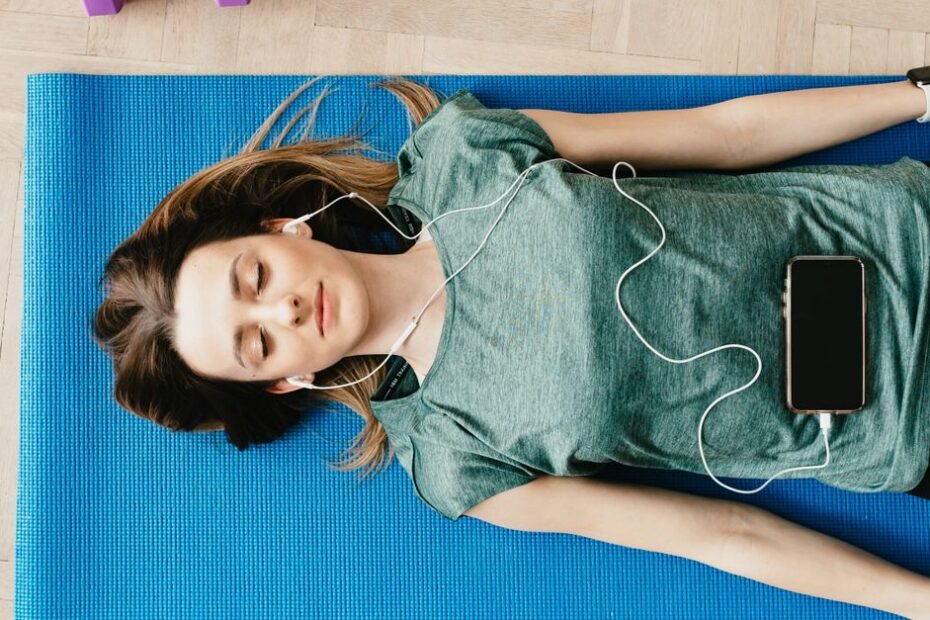
You know that moment at night when your body finally hits the bed — and your brain chooses that exact second to replay every conversation from 2019?
Also Read



The body scan is the meditation built for that moment. No incense, no lotus pose, no emptying your mind — just lying down and paying attention to your own body, one region at a time. It might be the most beginner-proof practice in all of mindfulness.
Quick answer: A body scan meditation is a practice where you slowly move your attention through your body — usually from toes to head — simply noticing whatever sensations you find, without trying to change anything. It anchors a racing mind in physical sensation, releases tension you didn’t know you were holding, and is one of the most-researched relaxation techniques for stress and sleep. Ten minutes lying down is all it takes.
Key Takeaways
- A body scan = slow, guided attention through the body, region by region, noticing without judging.
- It works by anchoring the mind in sensation — thoughts quiet down because attention is genuinely occupied.
- No experience needed: lying down with your eyes closed is the whole setup.
- Best times: in bed before sleep, after work, or any moment stress lives in your shoulders.
- Mind wandering is part of the practice, not failure — each return to the body is one “rep.”
- Start with guided 10-minute versions; the skill becomes portable surprisingly fast.
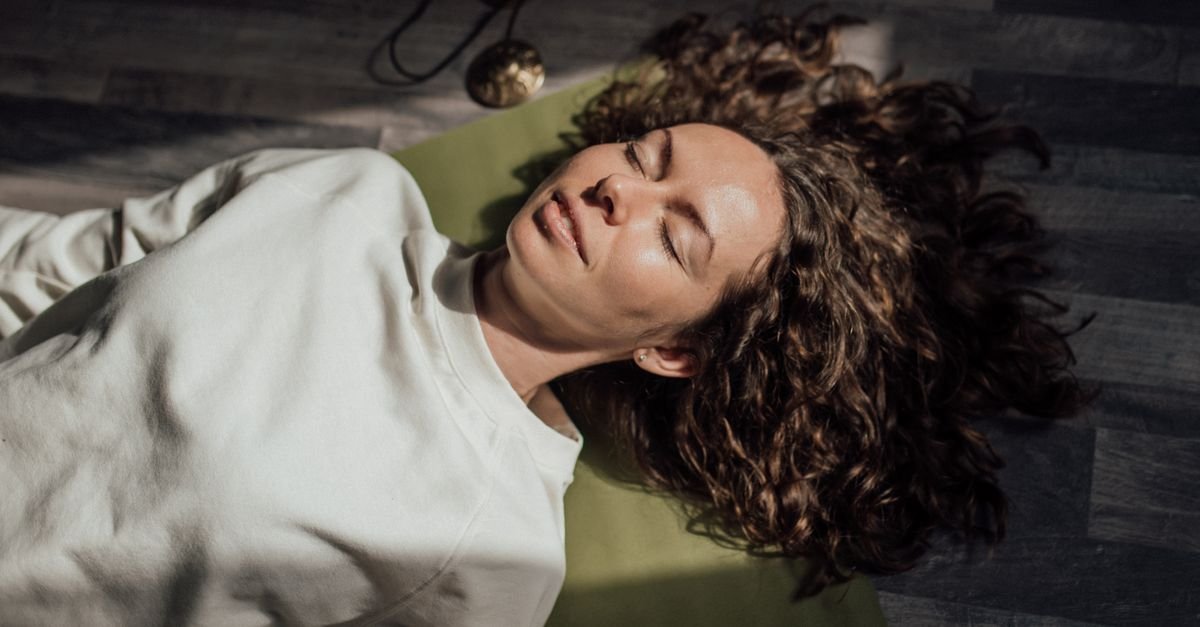
What Exactly Is a Body Scan Meditation?
The body scan is a foundational practice from mindfulness traditions, made famous in the West through Jon Kabat-Zinn’s Mindfulness-Based Stress Reduction (MBSR) program, where it’s often the very first technique taught.
The mechanics could not be simpler: you rest comfortably, close your eyes, and move a “spotlight of attention” slowly through your body — toes, feet, ankles, calves, and on upward — pausing at each stop to feel whatever is there.
Warmth, tingling, pressure, contact with the mattress, an itch, or nothing at all — every finding counts. The instruction is just to notice.
That’s the entire practice. No mantras, no breath control, no clearing the mind. Which is exactly why it works for people who “can’t meditate.”
Why Does Moving Attention Through the Body Calm the Mind?
A few things happen at once, and they stack beautifully.
Attention is single-occupancy. When your focus is genuinely in your left heel, it can’t simultaneously draft tomorrow’s difficult email. Sensation gives the mind a concrete home that worry can’t share.
The body holds the day’s tension — silently. Clenched jaws, raised shoulders, a tight belly: stress parks itself in muscles without asking. Simply noticing these spots often releases them, the way you drop your shoulders the instant someone points out they’re up by your ears.
It flips the nervous system’s switch. Slow, curious, safe attention to the body signals the parasympathetic “rest and digest” system — heart rate eases, breathing deepens on its own, and the body reads the message: no emergency here.
Researchers have studied body scanning extensively within MBSR programs, where it’s associated with reduced stress and improved wellbeing — and while no meditation is a magic cure, few practices have this much evidence per minute of effort.
How Do You Do a Body Scan? (The Full Walkthrough)
Here’s a 10–15 minute version you can do tonight.
1. Set up (one minute)
Lie on your back — bed, sofa, or floor mat — arms resting at your sides, legs uncrossed. Cover yourself with a blanket; body temperature drops when you lie still.
Close your eyes. Take three slower-than-usual breaths, letting the exhale be long.
2. Arrive (one minute)
Feel the whole body at once: its weight sinking into the surface, the points of contact — heels, hips, shoulder blades, head. Let the surface hold you completely.
3. Scan upward (eight to twelve minutes)
Bring attention to the toes of your left foot. What’s actually there? Warmth, coolness, tingling, the touch of a sock, nothing? Spend a few breaths, then let the spotlight glide on: sole, heel, ankle, calf, knee, thigh.
Repeat with the right leg. Then hips and belly — a common tension vault. Lower back. Chest, noticing it rise and fall. Both hands and arms. Shoulders (say hello, they’ve been up all day). Neck, jaw — let the teeth separate slightly. Face: eyes, forehead, scalp.
4. Close (one minute)
Feel the whole body again as one field, breathing. Notice the difference from when you began. Wiggle fingers and toes, stretch if you like, and open your eyes — or, if it’s bedtime, don’t.
What Do You Do When Your Mind Wanders?
It will — dozens of times. This is the most important thing to understand about the body scan: wandering is not the failure; it’s the workout.
The moment you notice you’ve drifted into thought is a moment of mindfulness — the exact skill you’re training. Each gentle return to the body is one repetition, the mental equivalent of one bicep curl.
So the inner move is: notice the drift, skip the self-criticism, and simply resume at the body part where you left off (or wherever the guide’s voice is now).
A scan with fifty wanderings and fifty returns isn’t a bad session. It’s a strong one.

When Is the Best Time to Do a Body Scan?
In bed, before sleep — the crowd favorite. The scan systematically powers down the tension that keeps bodies buzzing at lights-out, and many people never hear the end of a guided sleep version. Falling asleep mid-scan is a feature, not a bug. It pairs perfectly with the ideas in our evening wind-down routine.
After work — a ten-minute scan is a hard border between the workday and your evening, flushing the day out of your shoulders before it follows you to dinner. (More border-drawing ideas in how to relax after work.)
During anxious moments — a short seated version (even three minutes, feet to head) grounds a spiraling mind in something physical and present.
Morning, for slow starters — a five-minute scan before reaching for the phone sets a noticeably different tone for the day.
Body Scan vs. Other Relaxation Techniques: Which Should You Pick?
The gentle family of practices, matched to temperament:
Body scan vs. progressive muscle relaxation (PMR): PMR actively tenses and releases each muscle group; the scan only observes. If you need to do something physical to settle, start with PMR; if effort itself stresses you, the scan’s pure noticing wins. Many people use PMR first, scan after — a lovely one-two.
Body scan vs. breathing exercises: Breathwork is faster-acting for acute anxiety spikes; the scan is deeper for accumulated, whole-body tension. Keep both in the kit.
Body scan vs. sitting meditation: classic breath-focused meditation asks you to hold one small anchor; the scan gives attention a moving path — which restless minds often find far easier. The scan is the on-ramp; many graduates add sitting practice later.
What Might You Notice During a Scan? (A Field Guide)
Tingling, warmth, pulsing — ordinary and fascinating; sensation gets vivid when attention finally visits.
Numb zones — body parts where you feel… nothing. Also normal, especially early on. “Nothing here yet” is a valid observation; sensitivity grows with practice.
Discovered tension — the clenched jaw, the gripped belly. Notice it, breathe once “into” it, and allow — not force — softening.
Emotions — sometimes feelings surface when the body finally gets quiet attention; a wave of heaviness, or unexpected tears. Ordinary, human, and usually a sign the practice is reaching what needed reaching. Let it pass through like weather.
Sleepiness — the classic. At bedtime, surrender happily. In daytime practice, try it seated or with eyes half-open.
A gentle note: meditation supports wellbeing but isn’t therapy — if practice consistently surfaces distress, or anxiety and low mood are heavy companions lately, a mental-health professional is the right next conversation.
How Do You Build a Body Scan Habit That Sticks?
Attach it to an anchor you already have. “Lights out = scan begins” needs no willpower; the pillow is the reminder.
Start guided. A calm voice doing the navigating removes every excuse. Ten-minute guided scans (like the one above) are the ideal training wheels — most people go unguided naturally after a few weeks.
Shrink the minimum. On terrible days, do ninety seconds: feet, belly, jaw, done. Habits survive on their minimum viable days, not their best ones.
Track gently. A checkmark in a journal beside your evening entry is plenty — two symbols, ten seconds, surprising motivation.
Expect the fade-and-return. Every meditator lapses. The skill of restarting without self-scolding is the practice, in disguise.
Cozy companions for the practice — honest Amazon searches:
Meditation cushions →Weighted eye pillows →Soft throw blankets →

Common Body Scan Mistakes (and Kind Corrections)
Hunting for relaxation. Chasing a “result” creates the very striving that blocks it. The scan’s paradox: relaxation arrives precisely when you stop demanding it and just observe.
Judging the wandering. “I’m terrible at this” after each drift adds a stress layer to a de-stressing practice. Re-read the reps section — wandering is the gym.
Rushing the tour. A 90-second sprint from toes to head skims the surface. Slow is the active ingredient; let boring be okay.
Skipping the “boring” parts. The forearm you never think about may be quietly holding your mouse-grip tension from 3,000 emails. Visit everywhere.
Only practicing in crisis. The scan works best as maintenance — a nightly rinse for tension — not only as an emergency brake. Regular practice is what makes the emergency version actually work.
A 3-Minute Mini Scan for Busy Days
For the days when ten minutes feels like a fantasy, here’s the espresso version — seated, at your desk, eyes closed or soft:
- Feet (30 seconds): both feet on the floor — feel the full contact, the weight.
- Hands (30 seconds): resting on your thighs — warmth, texture, tingling.
- Shoulders and jaw (one minute): the two great tension vaults — notice, exhale, let them drop a millimeter.
- Breath in the belly (one minute): three slow rounds, feeling the rise and fall from the inside.
Three minutes, zero equipment, invisible to coworkers. It pairs beautifully with the micro-practices in mindfulness in daily life.
Frequently Asked Questions
What is a body scan meditation?
A mindfulness practice where you slowly move attention through your body — usually feet to head — noticing sensations without trying to change them. It anchors racing thoughts in physical sensation and systematically releases held tension. It’s a core technique in mindfulness-based stress reduction programs.
How long should a body scan take?
Ten to fifteen minutes is the sweet spot for beginners with a guided recording. Full MBSR-style scans run 30–45 minutes; busy-day mini versions work in three. Slower is generally deeper — speed is the one thing not to optimize.
Can body scan meditation help you sleep?
It’s one of the most popular uses. Done lying in bed, the scan powers down physical tension and gives the mind a calm track to follow instead of worries — and falling asleep before it ends is considered a win, not a failure.
Is it normal to fall asleep during a body scan?
Completely — especially at night, which is why it doubles as a sleep technique. If you want to stay awake for daytime practice, sit upright, keep eyes half-open, or practice earlier in the day.
What if I can’t feel anything in some body parts?
Very common at first. “No sensation here yet” is itself a mindful observation — note it neutrally and move on. Interoception (your ability to sense your body from within) sharpens noticeably over weeks of practice.
What’s the difference between a body scan and progressive muscle relaxation?
PMR actively tenses and releases each muscle group; a body scan only observes sensations without changing anything. PMR suits people who settle best by doing; the scan suits those who need to practice pure allowing. They combine well — PMR first, scan after.
How often should I do a body scan?
Daily is ideal and easiest to maintain when attached to bedtime. Benefits are strongest with regular practice — think of it as a nightly rinse for accumulated tension rather than an occasional deep-clean.
The bottom line
The body scan asks for nothing you don’t already have: a place to lie down, ten minutes, and a willingness to visit your own body with curiosity. Wander fifty times, return fifty-one. Tonight, when your head hits the pillow and the 2019 replays begin — start at your toes instead.

I'm Khan Laila, the founder and editor of The Self-Care Edit. I'm a dedicated self-care enthusiast and researcher (not a medical professional) on a mission to make relaxation, better sleep, and everyday wellbeing simpler and more accessible. I write and curate every guide here with genuine care, honest product picks, and a firm belief that self-care should be realistic and guilt-free.