Also Read



When work spills into every evening and weekend, stress builds and everything else suffers. Work-life balance is not about working less and achieving nothing — it is about protecting your time and energy so both your career and your life can thrive.
This guide covers practical ways to improve your work-life balance, the planners and tools that help, and the habits that keep work from taking over — so you feel calmer, more present, and more in control.
How do you improve work-life balance?
You improve work-life balance by setting clear boundaries between work and personal time, prioritizing what matters, planning your days intentionally, and protecting time for rest and the people you love.
It rarely happens by accident. Balance comes from small, deliberate choices repeated consistently, not from waiting for a quieter season that never quite arrives.
Key takeaways
- Balance is built on boundaries, not just working fewer hours.
- Planning your time gives you control and reduces overwhelm.
- Protecting rest and relationships is part of the work.
- Small daily habits matter more than grand gestures.
- Balance looks different for everyone — define yours.
Why does work-life balance matter?
Without balance, chronic stress creeps in, affecting your health, sleep, relationships, and even your performance at work. Over time it can lead to burnout that is hard to recover from.
Good balance protects your wellbeing and actually makes you more effective, because a rested, fulfilled person brings more energy and focus to everything. It is not a luxury — it is essential.
What are the signs of poor work-life balance?
The warning signs are worth knowing. Constantly thinking about work, skipping meals or sleep to keep going, no time for hobbies or loved ones, and feeling perpetually exhausted all point to imbalance.
If personal life consistently loses out to work, or you cannot remember your last real break, it is a signal to make some changes before stress takes a bigger toll.
1. Set clear boundaries
Boundaries are the foundation of balance. Decide when your workday ends, avoid checking email at all hours, and protect your personal time as firmly as you would an important meeting.
Learning to say no kindly is part of this. Our guide to setting boundaries shows how to protect your time without guilt.
2. Use a planner to take control
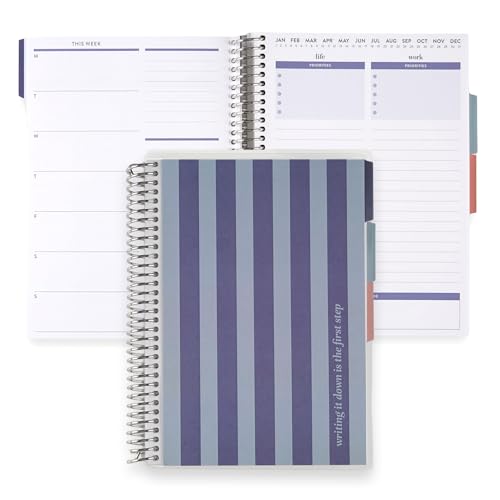
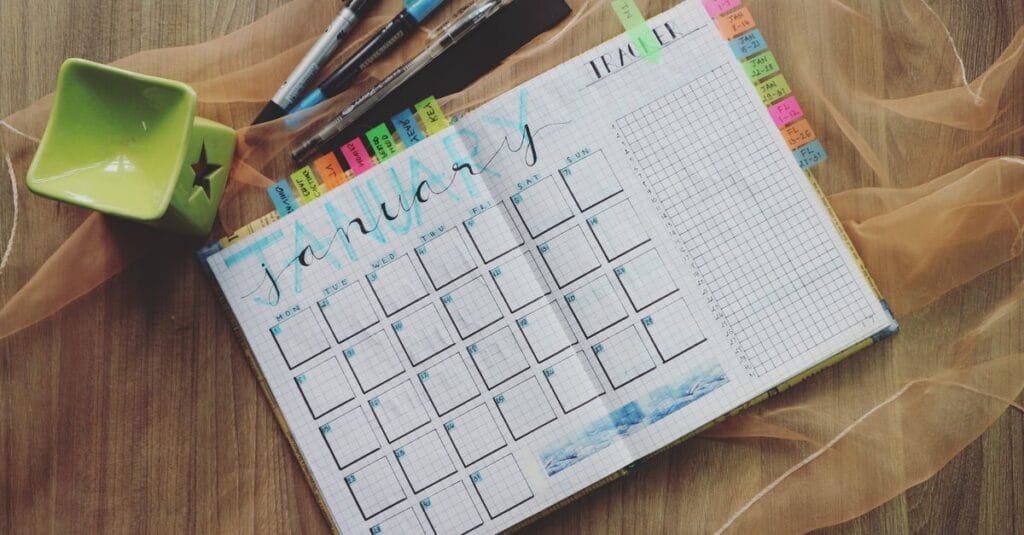
A planner turns a chaotic schedule into something manageable. By mapping out work tasks and personal time together, you can see your week clearly and make sure life gets scheduled too, not just work.
Blocking time for rest, exercise, and loved ones makes them real commitments rather than afterthoughts. A simple planner is a powerful tool for balance.

3. Prioritize what truly matters
Not everything is equally important, at work or at home. Focusing on your genuine priorities — and letting go of low-value busywork — frees time and energy for what actually matters.
Ask yourself what really needs doing today versus what merely feels urgent. This clarity prevents you from pouring hours into things that do not deserve them.
4. Schedule downtime deliberately
Rest rarely happens unless you plan it. Scheduling downtime — hobbies, relaxation, time with loved ones — protects it from being swallowed by work or chores.
Treat these blocks as non-negotiable appointments with yourself. Deliberate rest is what recharges you, and it deserves a place in your calendar just as much as work does.
5. Unplug after work
Truly disconnecting is essential for balance. Creating a clear end-of-work ritual and resisting after-hours messages lets your mind recover instead of staying in work mode all evening.
Our guide on how to relax after work helps you switch off and reclaim your evenings for yourself.
6. Take real breaks during the day
Balance is not only about after-hours — it is about how you work too. Regular short breaks, a proper lunch away from your desk, and moments to breathe keep stress from building through the day.
Working in focused bursts with genuine pauses is healthier and more productive than grinding non-stop. Breaks are part of good work, not a break from it.
7. Delegate and ask for help
You do not have to do everything yourself. Delegating tasks at work and sharing responsibilities at home lightens your load and frees time for what matters most.
Asking for help is a strength, not a failing. Spreading the load is one of the most practical ways to create breathing room in an overloaded life.
8. Protect time for relationships
Connection is a cornerstone of a balanced life. Making time for family and friends — even small, regular moments — nourishes you in ways work never can.
Relationships are easy to neglect when work is demanding, so protect them intentionally. The people you care about are a big part of what balance is meant to preserve.

9. Make room for self-care
Self-care keeps you resilient enough to handle work’s demands. Exercise, good sleep, hobbies, and calming rituals all restore the energy that a busy life drains.
Far from being selfish, caring for yourself is what lets you show up well for everything else. It belongs firmly in your work-life balance, not at the bottom of the list.
10. Regularly review and adjust
Balance is not a fixed destination but an ongoing adjustment. Life changes, so check in regularly on how your balance feels and tweak your boundaries and routines as needed.
Some seasons will lean more toward work and others toward life, and that is normal. The goal is to keep returning to a sustainable, healthy equilibrium over time.
What are the best planner tools for balance?
The best planner is one you will actually use. Some people love a paper planner for its tactile, screen-free clarity, while others prefer digital calendars with reminders and easy rescheduling.
The video below shares three simple rules for better work-life balance to guide how you use whatever tool you choose.
How do you balance work and life when working from home?
Remote work blurs the line between work and home, making boundaries even more important. Set defined work hours, create a dedicated workspace, and have a clear ritual to “leave” work at the end of the day.
Physically separating work from the rest of your home, even in a small way, helps your brain switch off. Without a commute to mark the transition, these deliberate boundaries do that job instead.

What if your job makes balance hard?
Some jobs are genuinely demanding, and these habits help you cope rather than magically fix the pressure. Focus on protecting your recovery time fiercely and controlling what you can.
If imbalance is relentless despite your best efforts, it may be worth a bigger conversation — about workload, flexibility, or longer-term changes. Recognizing when a situation itself needs to change is part of caring for yourself.
Frequently Asked Questions
What does work-life balance actually mean?
Work-life balance means dividing your time and energy between work and personal life in a way that feels healthy and sustainable. It is not about working as little as possible, but about setting boundaries so work does not crowd out rest, relationships, and the things that matter to you. Balance looks different for everyone.
How can I improve my work-life balance quickly?
Start with one clear boundary, like a firm end to your workday and no email after that time. Add a planner to schedule rest and personal time as real commitments, and protect at least one proper break each day. Small, consistent changes like these create noticeable improvement without needing a dramatic overhaul.
Do planners really help with work-life balance?
Yes. A planner lets you see your work and personal commitments together, so you can deliberately schedule rest, exercise, and time with loved ones rather than leaving them to chance. This turns balance from a vague intention into concrete plans, and gives you a reassuring sense of control over your time.
How do I stop thinking about work at home?
Create a clear transition ritual to mark the end of work — tidy your desk, write tomorrow’s top task, and step away deliberately. Avoid checking messages after hours, and fill your evening with something absorbing like a hobby, exercise, or time with people you love. Over time, these habits help your mind switch off.
Is work-life balance the same for everyone?
No. The right balance depends on your job, values, family situation, and personality. Some people want firm nine-to-five boundaries, while others prefer flexibility that blends work and life differently. The key is defining what feels healthy and sustainable for you, then protecting it, rather than comparing yourself to anyone else.
How do you set boundaries with a demanding boss?
Setting boundaries upward takes tact but is entirely possible. Communicate clearly and professionally about your capacity, propose realistic timelines, and be honest when your plate is genuinely full rather than silently overloading yourself.
A good manager would rather know than watch you burn out. Framing boundaries around doing your best work sustainably, not around doing less, usually earns respect and protects your wellbeing at the same time.
What is the difference between work-life balance and blend?
Balance implies clear separation between work and life, while “blend” means weaving them together more flexibly — answering an email in the evening but taking a midday break, for example.
Neither is right for everyone. Some people thrive on firm boundaries, others on flexibility. The key is choosing intentionally what works for you, rather than letting work bleed everywhere by default.
How does technology affect work-life balance?
Technology is a double-edged sword. It enables flexible, remote work, but it also makes us reachable around the clock, blurring the line between on and off.
The answer is intentional use: silence work notifications after hours, keep work apps off personal devices where you can, and set clear digital boundaries so technology serves your balance rather than eroding it.
How do you take a real vacation?
A true break means actually disconnecting. Plan ahead, set an out-of-office reply, hand over responsibilities, and resist checking email so your mind can genuinely rest and recharge.
Even a staycation counts if you unplug from work. Real time off is not a luxury — it is essential recovery that makes you more effective when you return, so protect it fully.
What are the signs you’re heading for burnout?
Burnout builds gradually, so watch for warning signs: constant exhaustion, cynicism about work, dropping performance, irritability, and losing enjoyment in things you used to like.
If you notice these, treat them as a serious signal to rebalance before things worsen. Catching burnout early, and adjusting your workload and recovery, is far easier than recovering from full burnout later.
How do you balance work with family life?
Protecting family time takes intention when work is demanding. Scheduling dedicated, phone-free time with loved ones and being fully present during it matters more than the number of hours.
Quality often beats quantity. Small, consistent rituals — a shared meal, bedtime routines, a weekend activity — keep family connection strong even during busy working seasons.
Can you have balance during a busy season?
Some seasons are unavoidably intense, and perfect balance may not be realistic then. The goal shifts to protecting the essentials — sleep, quick recovery moments, and key relationships — until the pressure eases.
Accept that balance ebbs and flows. What matters is not letting a busy season become a permanent way of life, and deliberately restoring balance once the crunch has passed.
How do you say no gracefully at work?
Saying no is a skill that protects your balance. You can decline kindly by acknowledging the request, explaining your current priorities, and offering an alternative or timeline where possible.
A thoughtful no is not rude — it is honest and professional. Protecting your capacity means you can deliver well on what you do take on, which serves everyone better than overcommitting.
A simple weekly work-life balance check-in
Once a week, pause and reflect: did I rest enough, connect with loved ones, and protect my personal time, or did work take over? A few honest minutes reveals where you are drifting.
Then set one small intention for the week ahead. This gentle, regular review keeps balance from slipping away unnoticed and helps you course-correct before stress builds up.
How do you protect your evenings from work?
Your evenings are prime recovery time, so guard them. Set a firm finish time, create a shutdown ritual to close the workday, and keep work notifications off your personal devices after hours.
Fill the space with something restorative — a hobby, a walk, time with loved ones, or simply rest. Protecting even a couple of genuinely work-free evenings each week makes a real difference to how balanced and refreshed you feel.
How do you know when your balance is off?
Your body and mood are reliable signals. Feeling constantly tired, resentful of work, unable to switch off, or noticing that hobbies and relationships have quietly disappeared all suggest your balance has tipped too far.
Catching these signs early lets you course-correct before stress becomes burnout. A quick, honest weekly check-in with yourself is often all it takes to notice the drift and gently pull things back into balance.
Final thoughts
Work-life balance is not a luxury or a fixed destination — it is an ongoing practice of protecting your time, energy, and wellbeing. With clear boundaries, thoughtful planning, and space for rest and relationships, you can keep work in its place and enjoy the rest of your life.
Start with one boundary and one planned block of rest this week. To build more calm into your everyday life, explore our complete guide to building a self-care routine for better sleep and less stress.

I'm Khan Laila, the founder and editor of The Self-Care Edit. I'm a dedicated self-care enthusiast and researcher (not a medical professional) on a mission to make relaxation, better sleep, and everyday wellbeing simpler and more accessible. I write and curate every guide here with genuine care, honest product picks, and a firm belief that self-care should be realistic and guilt-free.