
Nighttime anxiety is when worry, racing thoughts, or physical tension spike as you try to sleep — or when you wake in the small hours with your mind whirring. It is incredibly common — and gentle, practical techniques can calm both your mind and body so rest can return.
Also Read



This guide explains why anxiety strikes at night, how to calm it in the moment, and how to reduce it over time — plus when nighttime anxiety is worth talking to a professional about.
What is nighttime anxiety?
Nighttime anxiety is anxiety that appears or intensifies in the evening and at night. It might show up as a racing mind at bedtime, physical restlessness, or waking anxious in the early hours.
Because there are fewer daytime distractions, worries often feel louder in the dark. If your calm days give way to anxious nights, you are experiencing a very common pattern.

Key takeaways
- Nighttime anxiety is common — worries feel louder in the quiet dark.
- A long, slow exhale calms the body fast.
- Get worries out of your head and onto paper.
- A calming wind-down routine reduces bedtime anxiety.
- Persistent anxiety is worth discussing with a professional.
Why does anxiety get worse at night?
At night, the day’s distractions fall away, leaving your mind free to latch onto worries. Tiredness also lowers your resilience, so anxious thoughts feel bigger and harder to manage.
Lying still in the dark, with nothing to do but think, can amplify anxiety. Add worry about not sleeping, and a self-feeding cycle of anxiety and wakefulness can take hold.
The anxiety-sleep cycle
Anxiety and poor sleep feed each other: anxiety keeps you awake, and lost sleep makes you more anxious the next night. Breaking this loop is the key to peaceful nights.
The way out is to calm the anxiety and take the pressure off sleep at the same time, so neither one keeps fueling the other.
Calm your body with slow breathing
When anxiety hits at night, slow breathing is your fastest tool. A long, slow exhale activates your body’s relaxation response and quiets the fight-or-flight feeling.
Try breathing in for four counts and out for six or more. Our guide to simple breathing exercises offers techniques perfect for calming anxiety in bed.
Get the worries out of your head
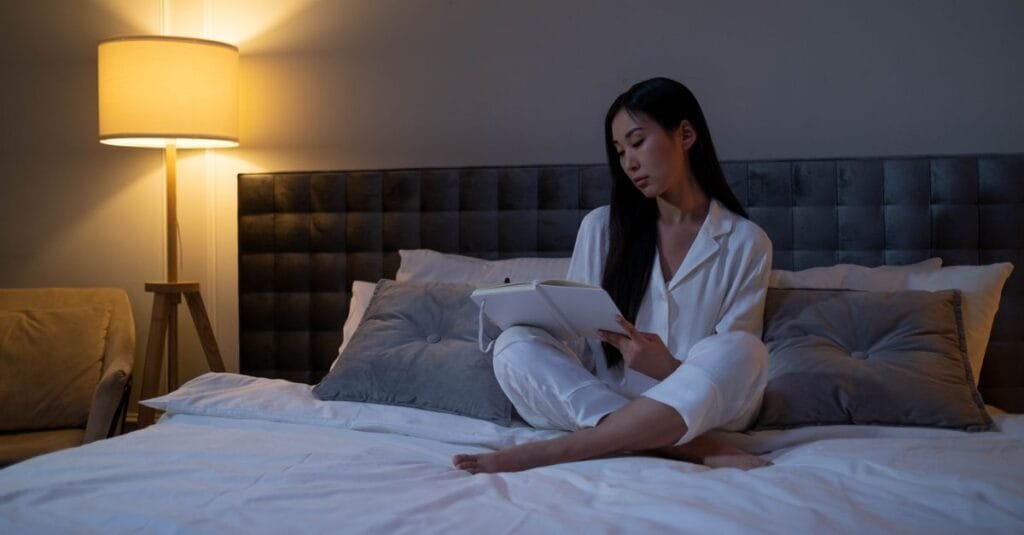
A racing mind calms when you offload it. Keep a notebook by your bed and write down your worries, or make a quick to-do list to park tasks until morning.
Telling your brain “I’ve noted it, I’ll deal with it tomorrow” reduces the urge to keep churning. It is one of the most effective tools for a whirring mind.
Try grounding techniques
Grounding pulls you out of anxious thoughts and back into the present. The 5-4-3-2-1 method — naming things you can see, hear, touch, smell, and taste — works well in bed.
Focusing on physical sensations interrupts the worry spiral. Our guide to grounding techniques explains this simple, powerful tool.
Relax your body physically
Anxiety lives in the body as tension, so releasing it helps. Progressive muscle relaxation — tensing then releasing each muscle group — melts physical stress and calms the mind.
A warm bath before bed, gentle stretching, or a body scan can also ease you into a calmer state ready for sleep.
Don’t fight wakefulness
Lying there anxious about not sleeping only makes things worse. If you cannot settle after a while, get up, do something calm in dim light, and return when sleepy.
Taking the pressure off sleep often eases the anxiety keeping you awake. Our guide on how to rest when you can’t sleep explains this gentle approach.
Build a calming wind-down routine
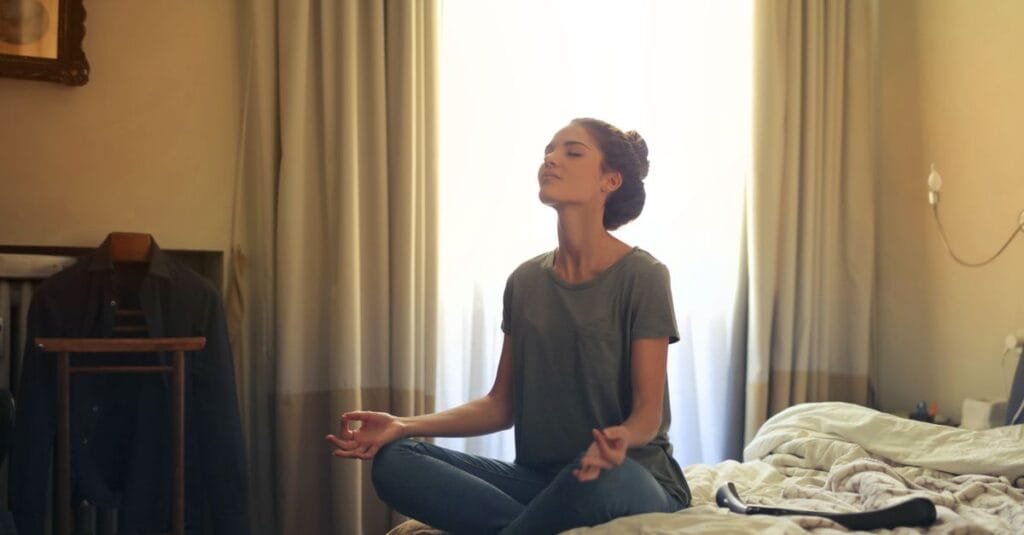
A soothing pre-sleep routine signals safety to an anxious mind. Dim the lights, put screens away, and do something relaxing like reading or gentle stretching before bed.
Repeating the same calming steps each night trains your body to wind down. Our evening wind-down routine offers a gentle template.
Watch what you consume in the evening
Caffeine, alcohol, and stimulating content all fuel nighttime anxiety. Cutting caffeine from the afternoon and avoiding the news or intense shows before bed helps a great deal.
Doomscrolling is especially anxiety-provoking at night. Swapping it for something soothing protects your peace as bedtime approaches.
Address anxiety during the day too
Nighttime anxiety is often daytime anxiety that surfaces once things go quiet. Managing your overall stress and worry during the day reduces how much shows up at night.
Regular calming practices, movement, and connection all help. Our guide to calming your nervous system supports a steadier baseline.
Quiet a racing, overthinking mind
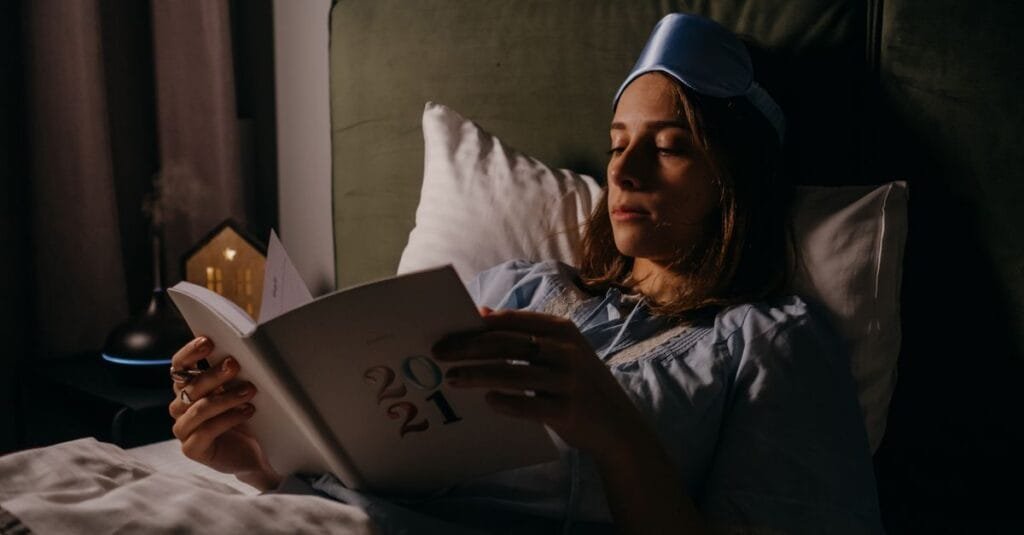
If overthinking keeps you up, gently redirecting your attention helps — focus on your breath, a calming image, or a body scan rather than trying to force thoughts away.
Fighting thoughts makes them louder; letting them pass without engaging works better. Our guide on how to stop overthinking offers more strategies.
Nighttime anxiety vs morning anxiety
Some people feel most anxious at night, others on waking. Morning anxiety is often linked to the natural cortisol rise, while nighttime anxiety tends to stem from the day’s worries surfacing in the quiet.
Both respond to similar calming tools. If mornings are your hard time, see our companion guide to morning anxiety.
Create a calm sleep environment
Your surroundings affect anxiety. A cool, dark, quiet, tidy bedroom feels safer and more restful, while clutter and light can keep a wired mind alert.
Small touches — soft lighting, comfortable bedding, perhaps a calming scent — turn your bedroom into a sanctuary that soothes rather than stimulates.
When to seek professional help
Occasional anxious nights are normal, but if nighttime anxiety is frequent, severe, or affecting your daily life, please talk to a doctor or therapist. Effective help is available.
Anxiety is highly treatable, and you do not have to manage it alone. If anxiety ever feels overwhelming or you have thoughts of self-harm, reach out to a professional right away — or a crisis line such as the 988 Suicide & Crisis Lifeline in the US, or your local emergency services.
A helpful resource for calmer nights
Some people find a weighted blanket comforting for nighttime anxiety, as the gentle, even pressure can feel soothing and grounding at bedtime.
🛏️ Shop weighted blankets on Amazon →
The 3am wake-up
Waking anxious in the early hours is a classic pattern. A natural rise in the stress hormone cortisol toward morning, combined with a quiet, dark room, can leave worries feeling huge.
Try not to check the time or your phone. Slow breathing and reminding yourself that everything feels worse at 3am usually helps you settle back down.
Bedtime worry journaling
Writing down your worries and a quick to-do list before bed clears them from your mind. Knowing they are safely noted reduces the urge to churn them over at night.
A few minutes of journaling in the evening can make a real difference. Our guide to journaling for stress relief offers gentle prompts.
Guided meditations and sleep stories
When anxiety keeps you up, a guided meditation, sleep story, or calming audio gives your mind something soothing to follow instead of your worries.
Many people find these especially helpful for nighttime anxiety. Keep the volume low and let the gentle voice guide you toward rest.
Calming visualization
Picturing a peaceful place in vivid detail — a beach, a forest, a cozy room — gives your anxious mind a soothing focus and eases tension.
Engaging your imagination with something calming crowds out worry. Combined with slow breathing, visualization is a lovely tool for drifting off.
Your body clock and evening light
Bright light at night, especially from screens, confuses your body clock and can heighten alertness and anxiety. Dimming lights in the evening signals that rest is coming.
Keeping mornings bright and evenings dim supports a healthy rhythm. A well-regulated body clock makes calm, timely sleep much easier.
The fear of not sleeping
Often the biggest driver of nighttime anxiety is worrying about not sleeping and how you will cope tomorrow. This fear is what keeps the cycle spinning.
Reminding yourself that rest still restores you, and that one rough night is survivable, takes the pressure off. That acceptance often lets sleep return.
Physical symptoms of nighttime anxiety
Anxiety at night can bring a racing heart, tense muscles, a churning stomach, or restlessness. These physical sensations are uncomfortable but not dangerous.
Slow breathing and muscle relaxation ease them directly. Understanding that these are just anxiety’s physical signs can stop them from feeling frightening.
If you have nighttime panic
Some people experience panic attacks at night, which can feel intense and scary. Slow breathing, grounding, and reminding yourself it will pass all help you ride it out.
Panic attacks are not dangerous, though they feel awful. If they happen often, please talk to a doctor or therapist, as effective help is available.
Limit stimulation before bed
The news, intense shows, work emails, and social media all rev up an anxious mind. Creating a buffer of calm before bed protects your peace.
Swap stimulating input for something soothing in the last hour of your day. Our guide on how to stop doomscrolling can help you unplug.
Build a soothing bedtime ritual
A consistent, calming routine tells your nervous system it is safe to wind down. Warm lighting, a bath, reading, or gentle stretching all work well.
Repeating the same soothing steps trains your body to relax. A predictable ritual is one of the best defenses against nighttime anxiety.
When therapy can help
If nighttime anxiety is persistent, structured approaches like cognitive behavioral therapy are highly effective for both anxiety and sleep problems.
A professional can teach you targeted tools and address the root causes. Seeking therapy is a positive, effective step, not a last resort.
Be kind to yourself about anxious nights
Beating yourself up over an anxious or sleepless night only adds stress. Meeting the experience with self-compassion helps you settle and reduces the fear of it happening again.
Everyone has hard nights sometimes. Treat yourself gently, and trust that with the right tools, calmer nights will become the norm.
You can teach your body to feel safe at night
Nighttime anxiety can feel like something that happens to you, but your nervous system can genuinely be retrained. Each calm, gently handled night teaches your body that bedtime is safe.
Over time, consistent soothing routines, slow breathing, and a kinder attitude toward the occasional bad night rebuild trust in sleep. The anxious nights grow rarer, and rest slowly becomes your default again.
Frequently Asked Questions
Why do I get anxiety at night?
There are usually several reasons at once. With fewer things to distract you, the mind turns inward and small worries take center stage. Being tired weakens your ability to cope, evening caffeine or screens can leave you wired, and unfinished stress from the day often surfaces the moment you lie down. For many people it also becomes a learned habit — which means, with the right calming tools, it can be gently unlearned.
How do I calm anxiety at night quickly?
Start with slow breathing — a long, slow exhale activates your relaxation response fast. Get worries out of your head by writing them down, and try grounding techniques like 5-4-3-2-1 to return to the present. Progressive muscle relaxation eases physical tension. Above all, take the pressure off sleep; aiming to rest rather than force sleep often calms the anxiety keeping you awake.
What is the anxiety-sleep cycle?
The anxiety-sleep cycle is when anxiety keeps you awake, and the resulting poor sleep makes you more anxious the next night, and so on. Each feeds the other. Breaking it means calming the anxiety and taking the pressure off sleep at the same time — using relaxation techniques, a calming routine, and a gentler, less fearful attitude toward the occasional restless night.
Should I get out of bed if anxiety keeps me awake?
Often, yes. Lying in bed anxious and frustrated can strengthen the link between bed and stress. If you cannot settle after a while, get up and do something calm and screen-free in dim light, then return to bed when you feel sleepy. This takes the pressure off and often eases the very anxiety that was keeping you awake.
When should I see a professional about nighttime anxiety?
See a doctor or therapist if nighttime anxiety is frequent, severe, or affecting your sleep, mood, or daily life. Anxiety is highly treatable, and you do not have to cope alone. If anxiety ever feels overwhelming or you have thoughts of harming yourself, please reach out to a professional immediately, or a crisis line such as the 988 Suicide & Crisis Lifeline in the US or your local emergency services. Seeking help is a sign of strength.
The bottom line
Nighttime anxiety is common and manageable. By calming your body with slow breathing, offloading worries onto paper, building a soothing routine, and taking the pressure off sleep, you can quiet anxious nights.
Try one technique tonight — slow breathing is a gentle start. And if anxiety persists, please reach out for support. For more calm, explore our guide to self-care for anxiety.

I'm Khan Laila, the founder and editor of The Self-Care Edit. I'm a dedicated self-care enthusiast and researcher (not a medical professional) on a mission to make relaxation, better sleep, and everyday wellbeing simpler and more accessible. I write and curate every guide here with genuine care, honest product picks, and a firm belief that self-care should be realistic and guilt-free.