
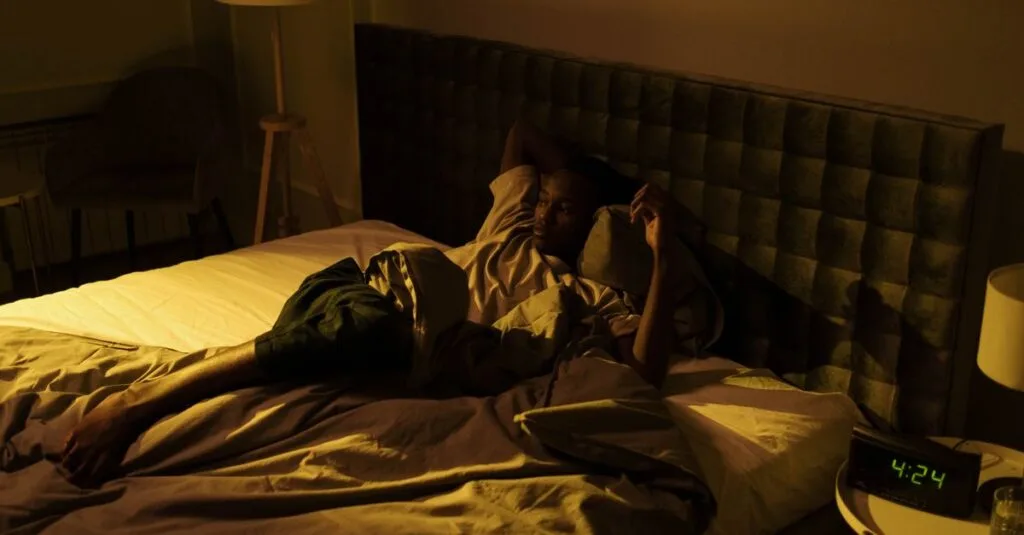
When you can’t sleep, the worst thing you can do is lie there forcing it. Instead, take the pressure off: if you’re still awake after about 20 minutes, get up, do something calm and screen-free in dim light, and return to bed when you feel sleepy. Resting — even without sleeping — still restores you.
Also Read



This guide walks through exactly what to do when sleep won’t come, how to rest when you’re wide awake, how to calm a racing mind at 3am, and when a sleepless night is worth talking to a doctor about.
What should you do first when you can’t sleep?
First, stop trying so hard. The harder you chase sleep, the more elusive it becomes, because effort and anxiety keep your mind alert.
Shift your goal from “I must sleep” to “I’m going to rest.” Relaxing your body and mind, without demanding sleep, is what actually invites it to arrive.
Key takeaways
- Don’t force sleep — trying harder keeps you awake.
- If awake after ~20 minutes, get up and do something calm.
- Rest counts too — lying calmly still restores you.
- Keep lights low and avoid screens and clock-watching.
- Chronic sleeplessness is worth discussing with a doctor.
Why can’t you sleep?
Common culprits include stress and a racing mind, caffeine or alcohol, screens before bed, an irregular schedule, an uncomfortable environment, or simply lying down not actually tired.
Understanding the likely cause helps you respond. A wired, anxious mind needs calming; a too-warm room needs cooling. Tonight, focus on gentle rest; tomorrow, address the cause.
Don’t force it — the paradox of trying to sleep
Sleep is like a shy guest — the more you demand it, the more it hides. Lying there frustrated, willing yourself to sleep, only raises your stress and keeps you awake.
Letting go of the pressure is powerful. Tell yourself it’s okay to just rest, and that even lying calmly is doing your body good. That acceptance often lets sleep slip in.
The 20-minute rule
Sleep experts often suggest that if you’ve been awake for around 20 minutes, you get out of bed rather than tossing and turning. This protects the mental link between your bed and sleep.
Go to another room, do something calm and boring in dim light, and return to bed only when you feel sleepy. This resets you far better than lying there frustrated.
Keep the lights low and screens away
If you get up, keep lights dim and avoid your phone, laptop, and TV. Bright light and screens signal your brain to wake up, undoing your efforts.
Reach for something soothing instead — a dull book, gentle stretching, or quiet music. The goal is calm, low stimulation that eases you back toward sleep.

Try relaxation and breathing
Slow breathing and relaxation techniques calm the nervous system and prepare your body for sleep. A long, slow exhale is especially soothing.
Try the techniques in our guide to simple breathing exercises, or progressively relax each muscle group from your toes upward. Both quiet a busy body and mind.
Rest without sleeping
Here’s a comforting truth: lying quietly and resting still benefits your body and mind, even if you don’t fall asleep. Rest is restorative in its own right.
Taking the pressure off by aiming to rest rather than sleep often removes the very anxiety keeping you awake. Our guide to the art of doing nothing celebrates this gentle, goal-free rest.
Calm a racing mind
A busy mind is one of the most common reasons for sleeplessness. If worries or to-do lists keep spinning, try writing them down to park them until morning.
Gently redirecting your attention to your breath, a calming image, or a body scan also helps. Our guide on how to stop overthinking offers more ways to quiet mental chatter.

Get comfortable and cool
Your environment matters. A cool, dark, quiet room helps sleep, so adjust your temperature, blankets, and pillows until you feel genuinely comfortable.
Most people sleep best in a slightly cool room. Small comforts like a sleep mask or earplugs can also block out disruptions.
What to do if you wake at 3am
Waking in the night is normal, but panicking about it makes it worse. If you wake and can’t drift off again, apply the same gentle approach: don’t force it, keep calm, and rest.
Avoid checking the time or your phone. Focus on slow breathing and reassuring yourself that resting is enough, and sleep will usually return.
Stop clock-watching
Repeatedly checking the clock and calculating how little sleep you’ll get only fuels anxiety and alertness. It’s one of the most common sleep-sabotaging habits.
Turn your clock away or cover it. What you can’t see can’t stress you, and letting go of the countdown helps your mind relax.
What not to do when you can’t sleep
Avoid reaching for your phone and doomscrolling, which is stimulating and delays sleep further. Skip caffeine, alcohol, and heavy snacks late at night too.
Don’t lie there for hours growing frustrated, and resist starting anything mentally engaging like work. These all push sleep further away.
When anxiety keeps you awake
Anxiety and sleeplessness often feed each other. If worry regularly keeps you up, addressing the anxiety itself — during the day, not just at night — makes a big difference.
Calming practices, journaling, and support all help. Our guide to self-care for anxiety offers gentle strategies for an anxious mind.
Napping and next-day recovery
After a poor night, a short 20-minute nap early in the afternoon can help without harming that night’s sleep. Avoid long or late naps, which can.
Otherwise, get through the day with light, movement, and hydration, and resist over-caffeinating. Our guide to taking a power nap shows how to nap well.
Preventing sleepless nights
While tonight is about coping, better sleep habits prevent future sleepless nights. A consistent schedule, a wind-down routine, and a screen curfew all help enormously.
See our guide to sleep hygiene and complete guide to better sleep to build habits that make good sleep the norm.
When to see a doctor
The occasional bad night is normal. But if you regularly struggle to sleep for weeks, or daytime tiredness affects your life, it’s worth talking to a doctor.
Chronic insomnia is common and treatable, and effective help — including proven therapies — is available. A professional can rule out underlying causes and guide you to real solutions.
A helpful resource for better rest
Small comforts can make a restless night easier. A quality sleep mask blocks light and helps signal to your body that it’s time to rest.
🌙 Shop sleep masks on Amazon →
Protecting the bed-sleep connection
Your brain links your bed with whatever you regularly do there. If you spend hours awake and frustrated in bed, it can start to associate bed with wakefulness.
Keeping your bed mainly for sleep — and getting up when you cannot sleep — strengthens the message that bed means rest. This is a cornerstone of good sleep.
Do sleep sounds or white noise help?
For some people, gentle white noise, soft music, or nature sounds mask disturbances and soothe a busy mind. For others, silence works best.
Experiment to see what helps you. If noise from your surroundings keeps you up, a steady background sound can make a real difference.
What to eat and drink (and avoid)
Avoid caffeine from the afternoon onward, and skip alcohol and heavy meals close to bedtime — all can disrupt sleep even if they feel relaxing at first.
A light snack or a warm, caffeine-free drink can help if hunger keeps you up. A calming herbal tea is a soothing bedtime ritual.
The role of light and darkness
Light is the master signal for your body clock. Bright light and screens at night suppress the sleep hormone melatonin, while darkness encourages it.
Keep evenings dim and your bedroom as dark as possible. If you must get up, use the lowest light you can to avoid fully waking your brain.
A simple wind-down for restless nights
A calming pre-sleep routine tells your body it is time to rest. Try dimming lights, gentle stretching, reading, or a warm shower an hour before bed.
Repeating the same soothing steps each night builds a powerful cue for sleep. Our evening wind-down routine offers a gentle template.
Try a body scan or muscle relaxation
Progressive muscle relaxation — tensing then releasing each muscle group from toes to head — releases physical tension and quiets the mind.
A body scan, where you simply bring gentle attention to each part of your body, works similarly. Both are excellent for easing into sleep.
Reframe a sleepless night
Panicking about lost sleep makes things worse. Remind yourself that one bad night is not a disaster and your body will catch up.
Taking the fear out of sleeplessness reduces the anxiety that fuels it. A calm, accepting attitude is genuinely one of your best sleep tools.
Sleep and stress: a two-way street
Stress harms sleep, and poor sleep worsens stress, creating a loop. Breaking it often means tackling daytime stress, not just nighttime habits.
Managing stress with the techniques in our complete guide to stress relief can quietly transform your nights as well as your days.
When shift work or jet lag is the cause
Disrupted schedules from shift work or travel throw off your body clock, making sleep harder. Strategic light exposure and consistent routines help you adjust.
Be extra gentle with yourself during these periods. Your body is adapting, and a little patience plus good habits ease the transition.
Natural sleep aids: an honest look
Some people try herbal teas, magnesium, or melatonin for sleep. Evidence varies, and these are not right for everyone, so they are no substitute for good habits.
Always check with a doctor or pharmacist before starting any supplement, especially if you take other medication. Gentle habits remain the safest first step.
Building sleep confidence
Perhaps the most powerful long-term tool is trust — believing your body knows how to sleep. Anxiety about sleep is often the very thing keeping us awake.
Each calm, accepting night rebuilds that confidence. Over time, letting go of the struggle helps sleep become natural again.
Be kind to yourself after a rough night
If you had little sleep, resist the urge to catastrophize the day ahead. Your body is more resilient than you think, and one poor night rarely ruins everything.
Go gently, keep expectations light, and lean on daylight, movement, and hydration to carry you through. Treating yourself with compassion after a hard night helps you sleep more easily the next.
A quick recap for tonight
When sleep will not come, remember the essentials: do not force it, get up after about 20 minutes, keep lights low and screens away, and aim to rest rather than demand sleep.
Calm your mind with slow breathing, avoid clock-watching, and trust that your body knows how to sleep. These simple steps turn a stressful night into a manageable one.
Frequently Asked Questions
What should I do when I can’t fall asleep?
Stop forcing it. If you’ve been awake for around 20 minutes, get out of bed and do something calm and screen-free in dim light, then return when you feel sleepy. Try slow breathing or relaxation, keep the lights low, and aim to rest rather than demand sleep. Taking the pressure off often removes the very anxiety that’s keeping you awake.
Why can’t I sleep even when I’m tired?
Often it’s a wired, racing mind — stress and worry keep your brain alert even when your body is exhausted. Caffeine, alcohol, screens before bed, an irregular schedule, or an uncomfortable room can also be to blame. Calming your mind with breathing, journaling worries, and reducing stimulation usually helps more than simply lying there trying harder to sleep.
Is it bad to lie in bed awake?
Lying calmly and resting still benefits your body, so it’s not wasted time. However, lying there frustrated and tossing for a long time can weaken the mental link between your bed and sleep. That’s why experts suggest getting up after about 20 minutes to do something calm, then returning to bed when you feel sleepy, rather than struggling.
How do I get back to sleep if I wake up at 3am?
Don’t panic or check the clock — waking in the night is normal. Apply the same gentle approach: don’t force sleep, keep your lights and phone off, and focus on slow breathing. Reassure yourself that resting is enough. If you’re still wide awake after around 20 minutes, get up briefly for something calm in dim light, then return when sleepy.
When should I see a doctor about not sleeping?
An occasional bad night is normal, but if you regularly struggle to sleep for several weeks, or daytime tiredness is affecting your mood, focus, or health, talk to a doctor. Chronic insomnia is common and very treatable, including with proven therapies. A professional can rule out underlying causes and guide you toward effective, lasting solutions.
The bottom line
When sleep won’t come, the answer isn’t to try harder — it’s to let go, keep calm, and rest. Don’t force it, get up if you’re wide awake, avoid screens and clock-watching, and remember that rest itself restores you.
Be gentle with yourself tonight, and build better sleep habits for the long term. For a complete approach, explore our complete guide to better sleep.

I'm Khan Laila, the founder and editor of The Self-Care Edit. I'm a dedicated self-care enthusiast and researcher (not a medical professional) on a mission to make relaxation, better sleep, and everyday wellbeing simpler and more accessible. I write and curate every guide here with genuine care, honest product picks, and a firm belief that self-care should be realistic and guilt-free.