
Walking meditation is mindfulness in motion — the practice of walking slowly and deliberately while paying full attention to the experience of each step. It brings the calm and focus of meditation to a gentle activity, making it a wonderful option if sitting still feels hard.
Also Read


This guide explains what walking meditation is, its benefits, and exactly how to practice it step by step — indoors or outdoors — even if you have never meditated before.
What is walking meditation?
Walking meditation is a form of meditation done while walking, usually slowly, with your attention anchored in the present — on your feet, your breath, or your surroundings. It is meditation you do on the move.
Rather than aiming to get somewhere, the walk itself is the point. You bring the same gentle, focused awareness you would in seated meditation to the simple act of walking.

Key takeaways
- Walking meditation is mindfulness in motion — meditating while you walk.
- Great for people who find sitting still difficult.
- Anchor your attention on your steps, breath, or senses.
- Walk slowly and without a destination — the walk is the point.
- Just a few minutes can calm your mind and body.
Where does walking meditation come from?
Walking meditation has deep roots in Buddhist traditions, where it is often practiced alongside sitting meditation. Teachers like Thich Nhat Hanh helped bring it to a wide modern audience.
Today it is practiced by people of all backgrounds, religious or not, as a simple, accessible way to cultivate mindfulness and calm in everyday life.
Walking meditation vs ordinary walking
The difference is attention. In ordinary walking, your mind is usually elsewhere — planning, worrying, or scrolling. In walking meditation, you deliberately focus on the present experience of walking.
You are not walking to reach a destination or hit a step count. You are walking to be fully present, which transforms a routine activity into a calming practice.
The benefits of walking meditation
Walking meditation combines the benefits of mindfulness with gentle movement. It can reduce stress and anxiety, improve focus, lift your mood, and deepen your connection to the present.
Because it involves the body, it also grounds you physically, which many people find calming. It is a lovely way to feel both centered and refreshed.
Walking meditation vs seated meditation
For many people, walking meditation is easier than sitting still. If your mind races or your body feels restless when seated, moving gives that energy an outlet.
It is a fantastic entry point to meditation. If seated practice feels daunting, our guide to meditation for beginners and this walking approach make gentle starting points.

How to do walking meditation step by step
Start by standing still and taking a few breaths to settle. Then begin walking slowly, paying attention to the sensation of lifting, moving, and placing each foot.
When your mind wanders — and it will — gently bring your attention back to your steps, without judgment. Continue this slow, mindful walking for as long as you like.
Where can you practice?
You can practice almost anywhere. A quiet garden, park, or nature trail is ideal, but a hallway, room, or backyard works perfectly well, even in a small space.
Indoors, you can simply walk back and forth along a short path. The setting matters less than your attention, so use whatever space you have.
How slowly should you walk?
Traditionally, walking meditation is done quite slowly, which makes it easier to notice each sensation. But you can adapt the pace to what feels natural for you.
A slower pace deepens awareness, while a gentle stroll can work outdoors. Experiment to find a speed that keeps you present without feeling forced.
What should you focus on?
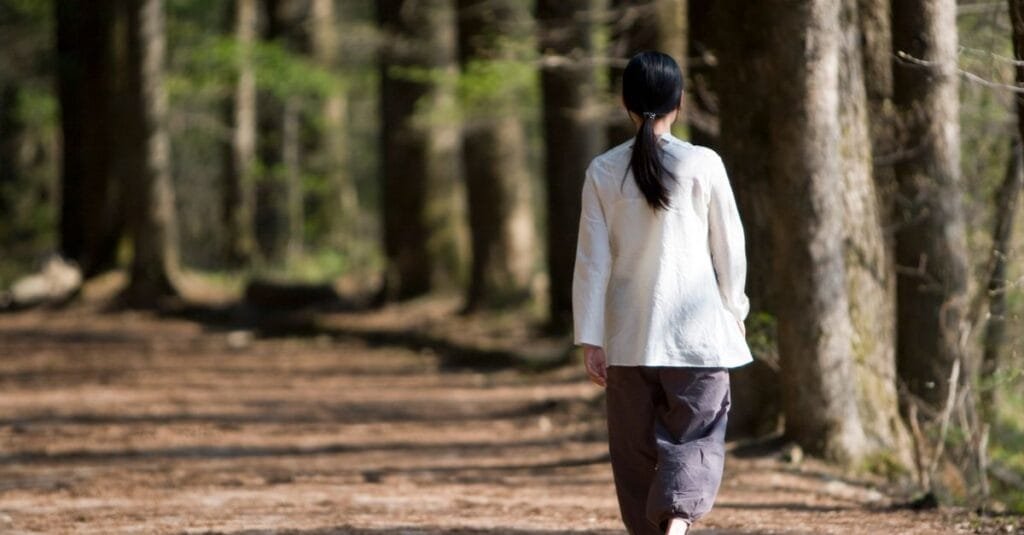
A common anchor is the sensation of your feet — the lifting, moving, and touching down with each step. This gives your mind something steady to rest on.
You can also focus on your breath, coordinating it with your steps, or open your awareness to the sights, sounds, and smells around you. Choose whatever keeps you present.
Walking meditation in nature
Practicing outdoors adds the restorative power of nature. Walking mindfully among trees, by water, or through a garden combines meditation with the calming effect of natural surroundings.
This pairs beautifully with the idea of forest bathing. Nature makes mindful walking especially soothing and grounding.
How long and how often?
Even five to ten minutes of walking meditation is beneficial. You can practice daily, weave it into an existing walk, or use it whenever you need to reset.
Consistency matters more than length. A short, regular practice trains your mind to settle and makes the calm easier to access over time.
Walking meditation for anxiety and stress
Walking meditation is especially helpful for anxiety, because the movement and physical focus give an anxious mind something grounding to hold onto.
The rhythm of mindful steps is naturally soothing. Our complete guide to stress relief includes more gentle, movement-based ways to calm down.
Common walking meditation mistakes
The main mistake is rushing or treating it like a workout. Walking meditation is not about speed, distance, or achievement — it is about presence.
Another is getting frustrated when your mind wanders. Wandering is normal; the practice is simply noticing and gently returning, again and again.
Tips for beginners
Start short and slow, choose a quiet spot, and be patient with yourself. It can feel odd at first to walk so deliberately, but that passes with practice.
Let go of doing it “perfectly.” As with all mindfulness, there is no failing — every gentle return of your attention is the practice working.
Making walking meditation a habit
Anchor it to something you already do, like a daily walk, a work break, or your commute on foot. Turning routine walks mindful is an easy way to build the habit.
Even one mindful walk a day adds up. Our guide to mindfulness in daily life offers more ways to weave presence into your routine.
A helpful resource for walking meditation
If you want to deepen your practice, a well-regarded book on mindfulness and meditation offers guidance, context, and gentle instruction to build on.
📚 Shop mindfulness books on Amazon →
Coordinating your breath with your steps
A lovely way to deepen walking meditation is to link your breath to your steps — for example, breathing in for two or three steps, then out for the same. This creates a gentle, calming rhythm.
You do not have to force it; let a natural pace emerge. Syncing breath and movement gives your mind a soothing anchor and deepens your sense of presence.
Using mental labels as you walk
Some practitioners silently note “lifting, moving, placing” with each step, matching words to the movement of the foot. This keeps the mind gently focused on the present.
The labels are simply a tool to hold your attention, not a rule. If they help you stay present, use them; if not, let them go and just feel the walking.
Indoor walking meditation
You do not need the outdoors. Indoors, choose a clear path of a few steps and walk slowly back and forth, turning mindfully at each end.
Walking in a small loop or line indoors is a traditional approach and perfect for bad weather or privacy. The short path actually helps you slow right down.
Turning your commute into practice
If you walk as part of your day — to work, the shops, or the bus — you can turn part of that journey into walking meditation by bringing mindful attention to your steps.
Even a few mindful minutes on an ordinary walk counts. It is an easy way to weave the practice into a busy life without finding extra time.
Walking meditation and your mood
Combining gentle movement, fresh air, and mindfulness makes walking meditation a natural mood-lifter. It can ease low mood and quiet a churning, anxious mind.
While it is not a treatment for depression, it is a supportive, healthy habit. If you are struggling with your mood, please also reach out to a professional for support.
Mindful walking in everyday life
Beyond formal practice, you can bring the same mindful quality to any walking you do — noticing your steps, your surroundings, and your breath rather than being lost in thought.
This turns countless daily moments into little pockets of calm. Our guide to mindfulness in daily life explores more ways to stay present.
When your mind wanders
Your mind will drift into thoughts, plans, and worries — this is completely normal and not a failure. The practice is simply noticing you have wandered and gently returning to your steps.
Each return is a rep for your attention, like a gentle mental push-up. Being kind rather than frustrated when you wander is a key part of the practice.
Practicing with others
Walking meditation can be done in a group, often in a slow, silent line. Many meditation retreats and classes include it alongside sitting practice.
Practicing with others adds a sense of shared calm and gentle accountability. It can also make the experience feel less self-conscious for beginners.
Barefoot and grounding walks
Walking barefoot on grass, sand, or earth adds rich sensory detail to your practice and a feeling of connection to the ground beneath you.
Feeling the textures underfoot naturally pulls you into the present. Where it is safe and comfortable, a barefoot walk can make the meditation especially vivid.
Adding gratitude to your walk
You can gently weave gratitude into a mindful walk by noticing and appreciating small things — the warmth of the sun, birdsong, the movement of your own body.
This blends beautifully with the practice. Our guide to practicing gratitude offers more ways to cultivate appreciation.
Walking meditation for focus and creativity
Many people find that a mindful walk clears mental fog and sparks ideas. Stepping away to walk with awareness gives your mind space to settle and reset.
A short walking meditation between tasks can restore focus far better than pushing through. It is a gentle productivity tool as much as a calming one.
Gentle physical benefits
On top of the mental benefits, walking meditation gets you moving gently, supporting circulation and easing physical tension — without the intensity of a workout.
It is a wonderfully accessible practice suitable for almost all fitness levels. For more short, easy movement, see our guide to movement snacks.
Making the practice your own
There is no single correct way to do walking meditation. Adapt the pace, setting, focus, and length to suit you, whether that is a slow indoor practice or a mindful stroll in the park.
The essence is simply walking with awareness rather than on autopilot. Shape it around your life so it becomes a practice you genuinely enjoy and keep.
Frequently Asked Questions
What is walking meditation?
Walking meditation is a form of meditation practiced while walking slowly and deliberately, with your attention anchored in the present moment — on the sensation of your feet, your breath, or your surroundings. Rooted in Buddhist tradition, it brings the calm and focus of meditation to gentle movement. Rather than walking to reach a destination, the walk itself is the practice.
How do you practice walking meditation?
Stand still and take a few settling breaths, then walk slowly while paying attention to lifting, moving, and placing each foot. When your mind wanders, gently return your focus to your steps without judgment. You can practice indoors along a short path or outdoors in a garden or park. Even five to ten minutes is beneficial, and a slow pace deepens the awareness.
What are the benefits of walking meditation?
Walking meditation combines mindfulness with gentle movement, so it can reduce stress and anxiety, improve focus, lift your mood, and deepen your sense of presence. Because it engages the body, it is also grounding, which many people find calming. It is especially helpful for anyone who finds sitting still difficult, making it an accessible and refreshing entry point to meditation.
Is walking meditation easier than sitting meditation?
For many people, yes. If your mind races or your body feels restless when you try to sit still, walking gives that energy a gentle outlet while you meditate. The physical movement gives an active or anxious mind something to focus on. This makes walking meditation a wonderful starting point if seated meditation has ever felt daunting or uncomfortable.
How long should I do walking meditation?
Even five to ten minutes offers real benefits, so there is no need to practice for a long time. Consistency matters more than duration — a short, regular practice trains your mind to settle and makes calm easier to reach. You can set aside dedicated time or simply turn an existing daily walk into a mindful one whenever it suits you.
The bottom line
Walking meditation is one of the most accessible ways to practice mindfulness — no cushion, no stillness, just slow, attentive steps. It calms the mind, grounds the body, and turns an ordinary walk into a moment of peace.
Try five minutes of mindful walking today, focusing gently on each step. For more ways to find calm, explore our complete guide to meditation and mindfulness.

I'm Khan Laila, the founder and editor of The Self-Care Edit. I'm a dedicated self-care enthusiast and researcher (not a medical professional) on a mission to make relaxation, better sleep, and everyday wellbeing simpler and more accessible. I write and curate every guide here with genuine care, honest product picks, and a firm belief that self-care should be realistic and guilt-free.