Meditation and mindfulness are among the most powerful, accessible tools for a calmer mind and a happier life. They cost nothing, need no equipment, and are backed by a growing body of research — yet many people feel unsure how to begin.
Also Read



This complete guide demystifies meditation and mindfulness: what they are, their benefits, the main techniques, and how to build a practice that lasts — with links to in-depth guides on every topic.
What is meditation, in one sentence?
Meditation is the practice of training your attention — often on your breath, body, or the present moment — to cultivate calm, clarity, and awareness. It is a skill anyone can learn with practice.
You do not need to empty your mind or sit for hours. Even a few minutes of gently returning your attention counts, and the benefits build over time.
Key takeaways
- Meditation trains your attention for calm and clarity.
- Mindfulness means being present in everyday life.
- Even a few minutes a day brings real benefits.
- There are many styles — find one that suits you.
- Consistency matters more than long sessions.
What is the difference between meditation and mindfulness?
Meditation is a formal practice, usually set aside as dedicated time to train your attention. Mindfulness is the broader quality of being present and aware, which you can bring to any moment of daily life.
They are closely linked: meditation strengthens mindfulness, and mindfulness extends the calm of meditation into your everyday activities. Together they form a complete approach to a more present, peaceful life.
What are the benefits of meditation?
Research and experience link regular meditation to reduced stress and anxiety, better focus, improved mood, greater emotional resilience, and even better sleep. It calms the nervous system and quiets mental noise.
Beyond these, many people find meditation brings a deeper sense of calm, self-awareness, and perspective. Its benefits ripple through nearly every part of wellbeing.
What are common myths about meditation?
The biggest myth is that you must “clear your mind” or stop thinking. In truth, meditation is about noticing when your mind wanders and gently returning your attention — the wandering is normal and part of the practice.
Other myths are that it takes hours, requires a special belief system, or that some people “can’t” meditate. In reality, anyone can practice, for just a few minutes, in a way that suits them.
How do you start meditating?
Begin simply: sit comfortably, close your eyes, and focus on your breath for just a few minutes, gently returning your attention whenever it wanders. That is genuinely all it takes to start.
Our guide to meditation for beginners walks you through your first sessions step by step, so you can start today with confidence.

What is breath-focused meditation?
Breath-focused meditation uses your breathing as an anchor for your attention. You simply notice each inhale and exhale, returning to the breath whenever your mind drifts. It is the most common and accessible starting point.
Our simple breathing exercises are a perfect gateway into this calming, portable practice you can use anywhere.
What is a body scan meditation?
A body scan involves slowly moving your attention through your body, noticing sensations without judgment. It builds awareness, releases physical tension, and is wonderfully calming, especially before sleep.
See our guide to the body-scan meditation to try this grounding practice that reconnects mind and body.
What is progressive muscle relaxation?
Progressive muscle relaxation involves gently tensing and releasing each muscle group in turn, teaching your body deep relaxation. It is a body-first practice that eases physical stress and aids sleep.
Our guide to progressive muscle relaxation walks you through it, and it pairs beautifully with breath and body-scan practices.
What is guided meditation?
Guided meditation is led by a teacher or recording that talks you through the practice. It is ideal for beginners, removing the guesswork and helping you stay focused with a calming voice to follow.
Apps, videos, and courses offer countless guided sessions for every need, from sleep to stress relief, making it easy to find one that suits your mood and goal.
How do you practice mindfulness in daily life?
Mindfulness is not limited to formal meditation — you can bring it to anything. Eating, walking, washing dishes, or simply pausing to notice your surroundings can all become mindful, present-moment practices.
Our guide to mindfulness in daily life shows how to weave presence and calm into your ordinary day.
What is walking meditation?
Walking meditation turns movement into mindfulness. Instead of walking on autopilot, you pay gentle attention to each step, your breath, and the world around you.
It is perfect if sitting still feels difficult, combining gentle movement with present-moment awareness. Even a slow, mindful walk around the block can be deeply calming.
What is loving-kindness or self-compassion meditation?
Loving-kindness meditation involves silently offering kind wishes to yourself and others, cultivating warmth and compassion. It is especially powerful for easing self-criticism and building emotional resilience.
It pairs naturally with self-compassion, gently softening how you relate to yourself and the people around you.
What about mantra and affirmation practices?
Some meditation styles use a repeated word, phrase, or sound (a mantra) as the focus of attention, which can be soothing and help quiet a busy mind.
Related to this, positive affirmations use encouraging phrases to shift your mindset. Both harness the calming power of gentle, focused repetition.
How long and how often should you meditate?
Consistency matters far more than duration. Even five minutes a day is genuinely beneficial, and a short daily practice builds the habit and its benefits better than occasional long sessions.
As you grow comfortable, you can extend your sessions if you wish. The best amount is one you will actually keep up, so start small and let it grow naturally.
Where and how should you sit to meditate?
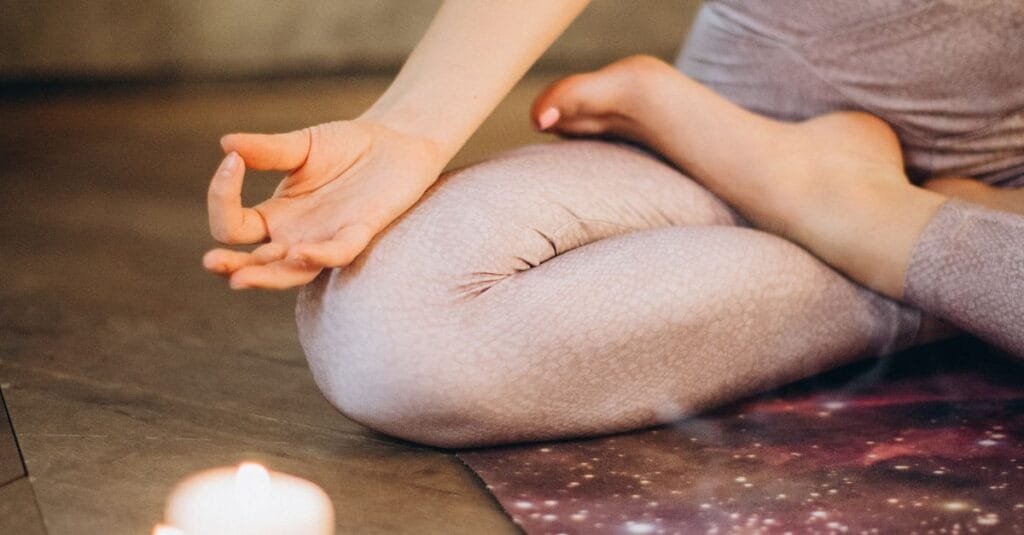
Sit somewhere quiet and comfortable, with your back naturally upright but relaxed — on a chair, cushion, or the floor, whatever suits you. Comfort helps you focus rather than fidget.
A supportive meditation cushion or a comfortable yoga mat can make longer sits far more comfortable and inviting.
How does meditation connect to mind-body practices?
Meditation is part of a wider family of mind-body practices that unite awareness with the body, including yoga, tai chi, and breathwork. All use the link between body and mind to create calm.
See our guide to mind-body connection practices to explore how movement and awareness work together.
How does meditation help with stress and sleep?
Meditation is one of the most effective tools for both. It calms the nervous system, easing stress in the moment and building resilience over time, and a calm mind makes falling asleep far easier.
See our complete guide to stress relief and complete guide to better sleep for how meditation fits into each.
Can apps and courses help you meditate?
Absolutely. Meditation apps offer guided sessions, reminders, and structure, while courses provide a deeper, teacher-led path. Both make starting and sustaining a practice much easier.
Our guide to top-rated mindfulness courses online covers structured ways to learn and deepen your practice.
How do journaling and mindfulness work together?
Journaling is a wonderful complement to meditation, helping you reflect, process emotions, and cultivate gratitude. A mindful journaling practice deepens self-awareness.
Explore our guides to mindfulness journals and practicing gratitude to pair reflection with your meditation.

What are common meditation challenges?
The most common challenge is a wandering mind — which is completely normal and not a failure. The practice is simply noticing the wandering and gently returning, again and again.
Other challenges include restlessness, impatience, and expecting instant calm. Being patient and kind with yourself, and starting with short sessions, helps you move past these early hurdles.
How do you build a lasting meditation practice?
Attach meditation to an existing habit, like right after waking or before bed, keep sessions short at first, and forgive yourself for missed days. Enjoyment and consistency are what make it stick.
Using a guided app or a set time each day helps enormously. Over weeks, a small daily practice becomes a natural, cherished part of your routine and a reliable source of calm.
What happens in your brain during meditation?
Meditation gently shifts your brain and body toward calm, easing the stress response and helping quiet the mental chatter of everyday thought. With regular practice, these changes can become more lasting.
Many people notice improved focus, steadier emotions, and a calmer baseline over time. You do not need to understand the science to benefit, but it helps explain why meditation feels so restorative.
Is meditation religious?
It does not have to be. While meditation has roots in various spiritual traditions, today it is widely practiced in completely secular ways for stress relief, focus, and wellbeing.
You can practice meditation with any belief system or none at all. Modern mindfulness, in particular, is a secular, evidence-informed approach accessible to everyone, whatever their background.
What is transcendental meditation?
Transcendental meditation is a well-known technique in which you silently repeat a personal mantra for around twenty minutes, twice a day, to settle the mind into a deeply restful state.
It is traditionally taught by certified instructors. While it is one specific branded method, the broader idea of using a repeated mantra as a focus is available to anyone.
What is Zen meditation?
Zen meditation, or zazen, comes from the Zen Buddhist tradition and typically involves seated meditation with attention on the breath and posture, observing thoughts without getting caught up in them.
It emphasizes simplicity and presence. You do not need to be Buddhist to draw on its calm, grounded approach to sitting and simply being.
What is Vipassana or insight meditation?
Vipassana, often translated as “insight,” involves observing your thoughts, feelings, and sensations as they arise, without judgment, to develop clear awareness of your inner experience.
It is the foundation of much modern mindfulness practice. By watching your mind with gentle curiosity, you learn not to be swept away by every passing thought or emotion.
What is visualization meditation?
Visualization meditation uses your imagination as the focus, picturing a peaceful scene, a calming light, or a desired outcome in vivid detail to relax and center yourself.
It is especially soothing for people who find imagery more natural than focusing on the breath. A calm mental scene can quickly ease tension and quiet a busy mind.
What is breath counting?
Breath counting is a simple technique where you count each breath, often up to ten and then starting again, to keep your attention anchored. When you lose count, you gently begin again.
It gives the mind a light task that makes focusing easier, which is why it is a favorite for beginners. The counting itself becomes a soothing, steadying rhythm.
Can you meditate lying down?
Yes, though sitting is often recommended because lying down can make you drowsy. Lying down is perfectly fine for practices like body scans, or when sitting is uncomfortable.
If you tend to fall asleep, an upright but relaxed sitting posture helps you stay alert. Choose whatever position lets you be both comfortable and reasonably awake.
What time of day is best to meditate?
There is no single best time — it depends on you. Many people love meditating in the morning to set a calm tone, while others prefer the evening to unwind.
The best time is simply one you can do consistently. Attaching meditation to an existing daily habit helps it become a reliable part of your routine.
What if you fall asleep while meditating?
Falling asleep is common, especially when you are tired, and it is nothing to worry about. It may even be a sign your body needs rest.
If you want to stay alert, try sitting upright rather than lying down, meditating with your eyes slightly open, or choosing a more awake time of day. Be kind to yourself either way.
Can children and teens meditate?
Absolutely, and it can be wonderful for them. Simple, short, playful practices like belly breathing or noticing sounds help children manage big feelings and build focus.
Keeping it brief and fun works best for young ones. Many schools now teach mindfulness, and practicing together as a family can be a lovely, calming shared ritual.
How do you meditate with a busy schedule?
You do not need long sessions. Even a minute or two of mindful breathing between tasks, or a short guided meditation, brings real benefit when done regularly.
Weaving mindfulness into everyday moments — a mindful coffee, a pause at a red light — also counts. For busy lives, small and consistent beats long and occasional.
What is mindful eating?
Mindful eating means giving full, gentle attention to your food — its taste, texture, and smell — and eating slowly without distraction. It turns an everyday act into a grounding practice.
It also supports a healthier, more enjoyable relationship with food. Because we eat every day, mindful eating is an easy, natural way to build more mindfulness into life.
Can meditation improve focus and productivity?
Yes. By training your attention to return to a single focus, meditation strengthens your ability to concentrate and resist distraction, which naturally supports productivity.
Many people find they work more calmly and clearly after even a short practice. A quieter, more focused mind is one of meditation’s most practical everyday benefits.
Can meditation help with difficult emotions?
It can, by helping you observe emotions with a little more space and less reactivity. Rather than being swept away, you learn to notice a feeling, allow it, and respond more calmly.
This does not suppress emotions but helps you relate to them more skillfully. That said, for persistent or overwhelming feelings, meditation works best alongside professional support.
What is a meditation retreat?
A meditation retreat is dedicated time — a day, weekend, or longer — spent focusing deeply on practice, often in a quiet setting and sometimes in silence. It can deepen your practice considerably.
Retreats are not essential, and beginners can start with just a home practice. But for those who want to go deeper, a retreat offers a rare chance to unplug and immerse yourself in stillness.
How do you know if meditation is working?
Progress is often gentle and gradual rather than dramatic. You might notice feeling a little calmer, reacting less to stress, sleeping better, or catching your mind wandering more quickly.
Do not judge sessions by how “quiet” your mind was — even a session full of wandering is good practice. The benefits show up in daily life over weeks, not in any single sitting.
How do you deepen your meditation practice over time?
Deepening comes naturally with consistency. As a short daily practice becomes established, you can gradually lengthen sessions, explore new techniques, or try guided courses and occasional retreats.
There is no finish line, and no need to rush. Approaching meditation with patience and curiosity, and letting it grow at its own pace, is what makes it a lifelong source of calm.
Can you combine different meditation styles?
Absolutely, and many people do. You might use breath-focused meditation on busy days, a body scan before sleep, loving-kindness when you need warmth, and mindful walking when sitting feels hard.
There is no rule that you must stick to one method. Experimenting with different styles keeps your practice fresh and lets you choose whatever suits your mood, energy, and needs on any given day.
What common mistakes should you avoid?
The biggest mistakes are expecting instant calm, judging yourself for a wandering mind, and giving up after a few days. Meditation is a gradual practice, and the wandering is part of it, not a failure.
Other pitfalls include trying to do too much too soon and only practicing when stressed. Starting small, being patient and kind with yourself, and practicing regularly rather than only in crisis are what make meditation truly rewarding.
Frequently Asked Questions
How do I start meditating as a complete beginner?
Start small: sit comfortably, close your eyes, and focus on your breath for just two to five minutes, gently returning your attention whenever your mind wanders. You do not need to clear your mind. Guided meditations via an app or video make it even easier by giving you a calming voice to follow. Consistency matters more than length.
Do I have to clear my mind to meditate?
No — this is the most common myth. Meditation is not about stopping thoughts, which is impossible, but about noticing when your mind wanders and gently returning your attention to your focus, like the breath. The wandering itself is a normal part of the practice, so there is no need to feel you are doing it wrong.
How long should I meditate each day?
Even five minutes a day is genuinely beneficial, especially when practiced consistently. A short daily habit builds the skill and its benefits better than occasional long sessions. As you grow comfortable, you can extend your practice if you wish, but the best length is one you will realistically keep up.
What is the difference between meditation and mindfulness?
Meditation is a formal practice of setting aside time to train your attention, while mindfulness is the broader quality of being present and aware in everyday life. Meditation strengthens mindfulness, and mindfulness carries the calm of meditation into daily activities. Together they form a complete approach to a calmer, more present life.
Can meditation help with anxiety and stress?
Yes, meditation is one of the most researched and effective tools for easing stress and anxiety. It calms the nervous system, quiets mental noise, and builds resilience over time. It is a wonderful support for everyday stress, though not a replacement for professional care if anxiety is persistent or overwhelming.
The bottom line
Meditation and mindfulness are simple, powerful practices for a calmer, clearer, more present life. Whether you focus on your breath, scan your body, walk mindfully, or simply bring awareness to everyday moments, there is a style for you.
Start with just a few minutes a day, be patient and kind with yourself, and explore the guides linked throughout as you go. For a broader routine of calm, see our complete guide to building a self-care routine. For an authoritative external reference, the NCCIH’s guide to meditation and mindfulness is excellent.

I'm Khan Laila, the founder and editor of The Self-Care Edit. I'm a dedicated self-care enthusiast and researcher (not a medical professional) on a mission to make relaxation, better sleep, and everyday wellbeing simpler and more accessible. I write and curate every guide here with genuine care, honest product picks, and a firm belief that self-care should be realistic and guilt-free.